 Buy Now














Why “Feeling Less” and “Lasting Longer” Are Not the Same Thing

One of the most persistent and widely misunderstood ideas surrounding delay sprays is the assumption that reducing sensation will automatically lead to better control and longer performance.
At first glance, this belief seems logical. If stimulation is what triggers climax, then reducing stimulation should delay it. This simple cause-and-effect reasoning is what leads many users to equate “feeling less” with “lasting longer.”
However, in practice, the relationship between sensation and control is far more complex.
While these two factors are connected, they are not interchangeable. Lower sensation can influence duration, but it does not guarantee improved control, better pacing, or a more satisfying overall experience.
Understanding the difference between these concepts is essential for anyone trying to use delay sprays effectively.

The Oversimplification of Sensation and Stamina
The idea that “less feeling equals more control” comes from an oversimplified view of how arousal works.
Human sexual response is not a single-variable system. It involves a combination of:
- physical sensitivity
- neurological feedback
- psychological arousal
- emotional state
- rhythm and pacing
- anticipation and focus
When users attempt to solve a complex, multi-factor process by aggressively reducing just one variable—physical sensitivity—they often encounter unintended consequences.
Instead of gaining smooth, controlled performance, they may experience:
- disconnection from physical feedback
- difficulty maintaining rhythm
- inconsistent response during intercourse
- reduced overall satisfaction
This is why stronger numbing does not always translate into better results.

Numbness Does Not Equal Control
A heavily numbing delay spray can reduce sensation quickly and noticeably. In some cases, this may increase duration in a purely mechanical sense.
However, control is not just about duration—it is about the ability to regulate stimulation in real time.
When sensation is reduced too much, several issues can arise:
- Loss of feedback: The body relies on sensory input to regulate arousal. When that input is dulled excessively, it becomes harder to judge intensity levels.
- Disrupted pacing: Without clear signals, maintaining a consistent rhythm becomes more difficult.
- Delayed responsiveness: Reaction time to stimulation changes may feel slower or less precise.
- Inconsistent experience: Some areas may absorb differently, creating uneven sensation across the skin.
In this state, a person may technically last longer, but not necessarily feel more in control.
Control requires awareness. When awareness is reduced, control often suffers.

The Role of Body Feedback in Timing
One of the most overlooked aspects of performance control is the role of feedback.
The body continuously sends signals about stimulation intensity, arousal buildup, and proximity to climax. These signals allow individuals to adjust behavior—whether by slowing down, changing rhythm, or pausing.
When delay sprays are used in moderation, they can slightly reduce overstimulation while still preserving enough feedback for these adjustments.
But when desensitization becomes too strong, that feedback loop weakens.
This creates a paradox:
- You may be further from climax physically
- But you are also less aware of where you are in the arousal cycle
This disconnect can make timing feel unpredictable rather than controlled.

Reduced Sensitivity vs Controlled Stimulation
There is an important distinction between two very different approaches:
- Suppressing sensation entirely
- Managing stimulation more effectively
The first approach focuses on eliminating as much feeling as possible. The second focuses on maintaining a balance.
Modern delay products increasingly lean toward the second philosophy.
Instead of creating a strong numbing effect, they aim to:
- reduce overstimulation without eliminating sensation
- preserve natural responsiveness
- maintain connection to physical feedback
- support smoother pacing adjustments
This approach recognizes that sensation itself is not the enemy—overstimulation is.
By targeting overstimulation rather than sensation as a whole, users can maintain better awareness while still gaining additional control.

Why Stronger Is Not Always Better
A common reaction to inconsistent results is to increase dosage.
If one or two sprays did not produce the expected effect, the instinct is often to apply more next time.
However, this strategy frequently leads to diminishing returns.
Excessive application can result in:
- overly numb sensation
- delayed onset timing
- uneven absorption across the skin
- reduced responsiveness during activity
- decreased overall enjoyment
In addition, higher doses may introduce practical concerns such as:
- transfer to a partner
- longer waiting periods before effectiveness
- difficulty fine-tuning results
This is especially relevant for high-strength lidocaine-based sprays.
While these products can be effective, they often require precise timing and careful dosage to avoid overshooting the optimal range.
More is not always better—often, it is simply less precise.

Inconsistency and the Illusion of Effectiveness
Another issue that reinforces the “stronger is better” mindset is inconsistency.
Many users experience varying results with the same product, leading them to believe that higher doses will stabilize performance.
In reality, inconsistency is usually influenced by multiple factors:
- application technique
- absorption time
- skin condition (dry vs hydrated)
- level of arousal before application
- mental state and stress levels
Increasing dosage does not address these variables—it often amplifies them.
For example, uneven absorption becomes more noticeable at higher doses, and delayed responsiveness becomes more pronounced.
This can make the experience feel less predictable rather than more controlled.

Different Product Philosophies
Not all delay sprays are designed with the same objective.
Some prioritize:
- rapid onset
- strong desensitization
- maximum delay potential
Others prioritize:
- gradual sensitivity reduction
- natural sensation preservation
- smoother control experience
These differences reflect fundamentally different philosophies.
Stronger, fast-acting sprays may appeal to users seeking immediate and noticeable effects. However, they often come with a narrower margin for error.
Milder formulations, including certain herbal-style products, tend to produce a more progressive effect.
Instead of a sharp drop in sensation, users experience a subtle shift in sensitivity over time.
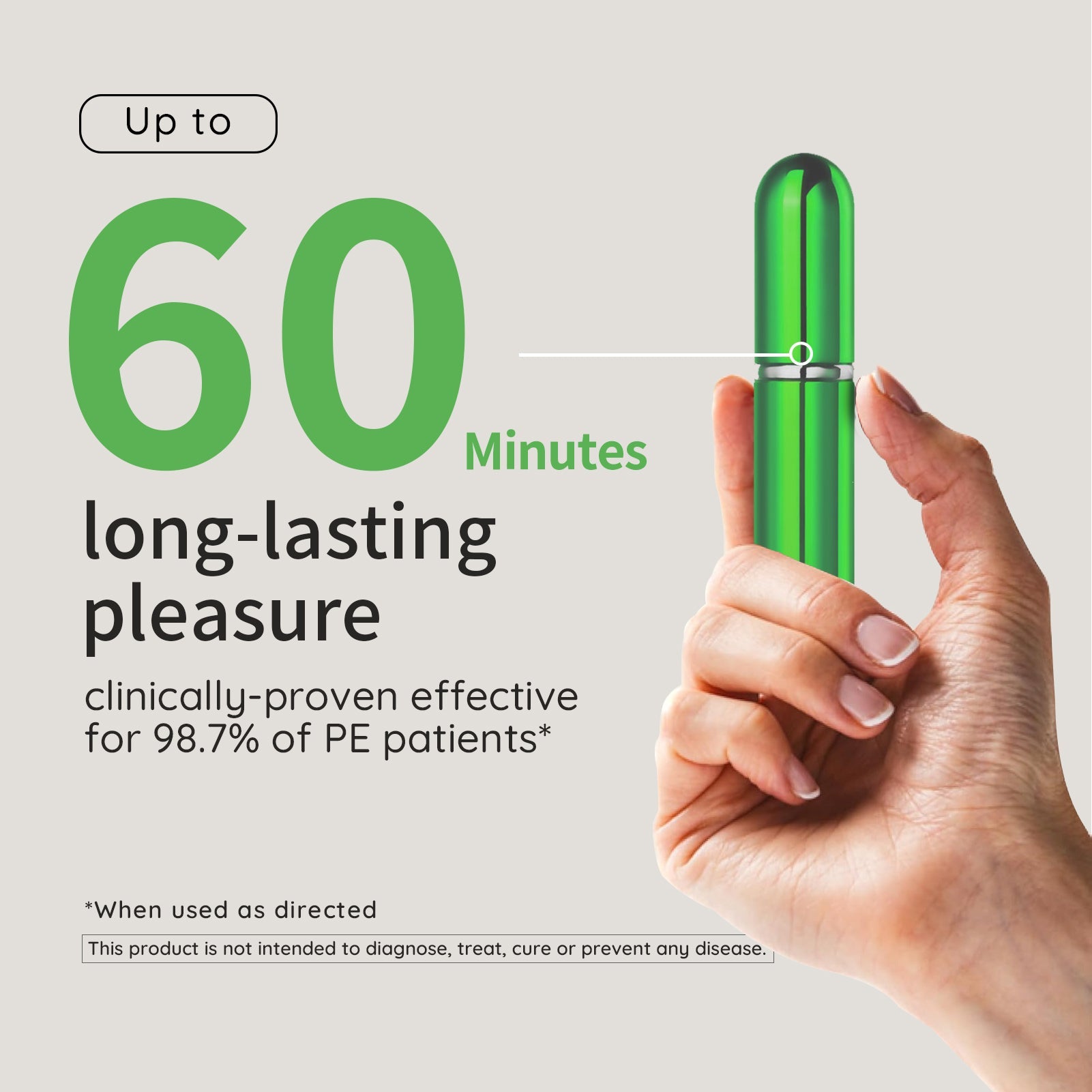
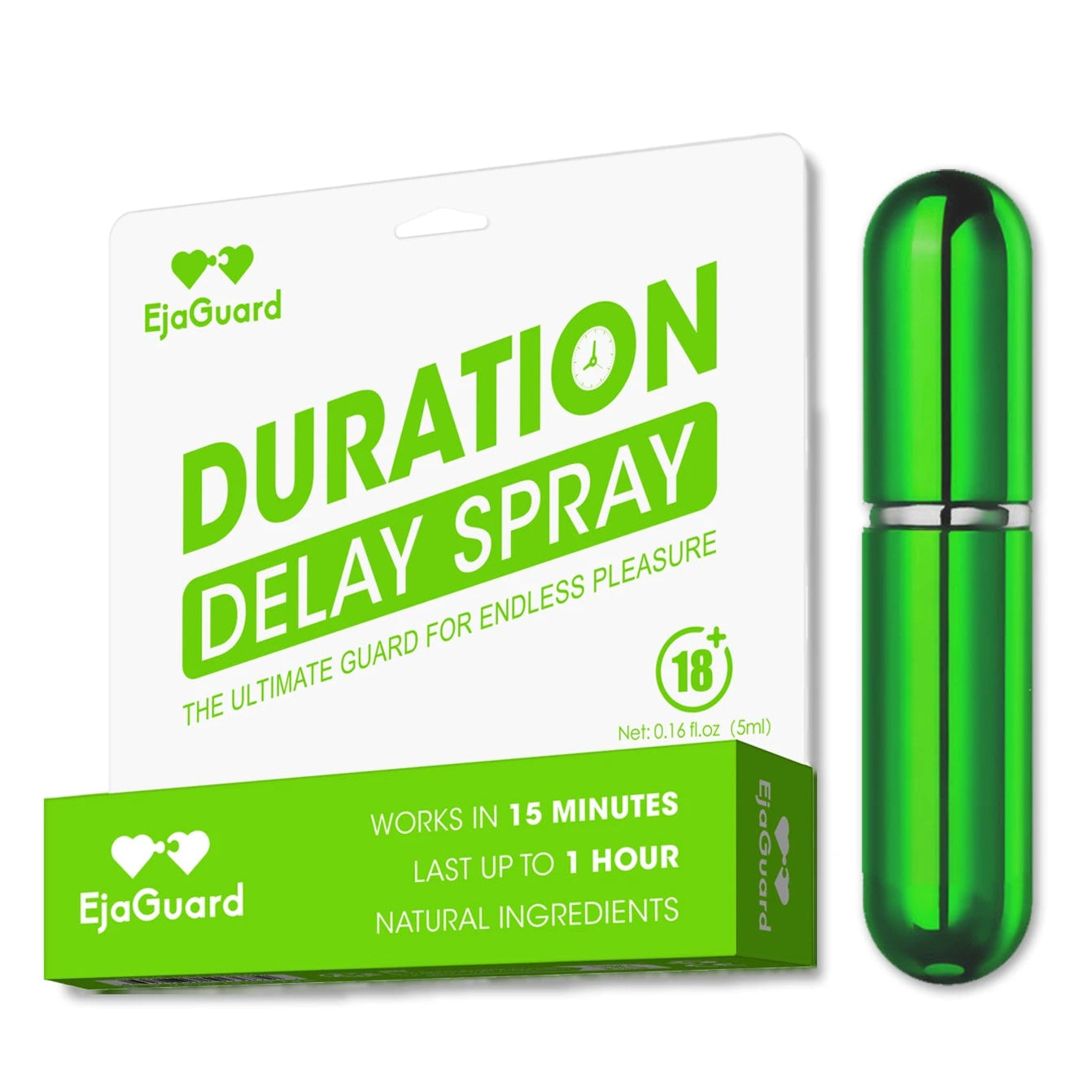
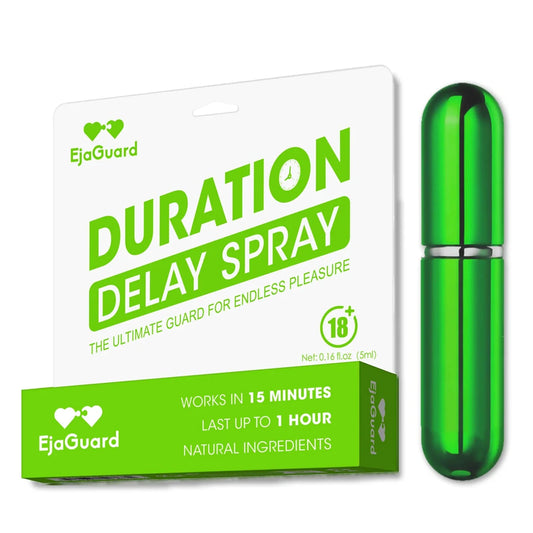
Products like EjaGuard are often discussed in this context because their effect is typically described as less aggressive and more balanced compared to high-strength numbing sprays.
The trade-off is that milder products may:
- take longer to reach optimal effect
- require more consistent application timing
- produce less dramatic immediate results
However, for many users, the overall experience feels more natural and easier to manage.

The Importance of Rhythm and Coordination
Control is not just about delaying climax—it is about maintaining coordination throughout the experience.
When sensation is too low, coordination can be affected in several ways:
- difficulty syncing movement with feedback
- reduced ability to adjust intensity smoothly
- less intuitive pacing
This can create a mechanical or disconnected feeling.
In contrast, when sensation is preserved within a manageable range, the body can maintain a natural rhythm.
This allows for:
- smoother transitions
- more consistent pacing
- better alignment between intention and response
In other words, control is not just about duration—it is about flow.

Psychological Factors in Control
Physical sensitivity is only one part of the equation.
Psychological factors play a significant role in performance, including:
- performance anxiety
- anticipation and excitement
- mental focus
- stress levels
- confidence
In many cases, individuals who rely solely on physical desensitization find that their results plateau.
Even with reduced sensitivity, mental tension can still accelerate arousal.
This is why some users report that:
- they feel less physically
- but still struggle with timing
True control often comes from a combination of physical and psychological adjustments.

The Interaction Between Mind and Body
The mind and body are not separate systems—they interact continuously.
For example:
- anxiety can increase sensitivity
- anticipation can accelerate arousal
- distraction can reduce awareness
When sensation is heavily reduced, the mind may attempt to compensate by increasing focus or intensity.
This can create an imbalance where:
- physical input is low
- mental stimulation remains high
The result is not always improved control.
Instead, it can feel like a mismatch between what the body feels and what the mind expects.
Balanced approaches tend to work better because they address both sides simultaneously.
Building Sustainable Control
Sustainable improvement usually comes from combining multiple elements rather than relying on a single solution.
These elements may include:
- moderate sensitivity reduction
- improved pacing awareness
- better timing of application
- reduced performance pressure
- increased familiarity with personal response patterns
Delay sprays can support this process, but they are not a complete solution on their own.
When used as part of a broader approach, they can enhance control.
When used as a substitute for awareness, they often fall short.

The Problem with Chasing Extremes
Many users fall into a cycle of chasing stronger effects.
When results are not ideal, the response is often:
- increase dosage
- switch to a stronger product
- apply more frequently
This cycle can lead to:
- over-desensitization
- reduced satisfaction
- increased inconsistency
Instead of solving the problem, it shifts it.
The focus moves from control to suppression.
But suppression is not the same as mastery.
Finding the Optimal Balance
The most effective use of delay sprays usually lies in finding a balance between:
- sensation and control
- responsiveness and delay
- awareness and reduction
This balance is different for each individual.
Factors such as sensitivity level, experience, and preferences all play a role.
However, the general principle remains consistent:
Enough sensation to maintain awareness, but not so much that it becomes overwhelming.
This is where many mild or moderate formulations tend to perform well.
They operate within a range that supports adjustment rather than eliminating feedback entirely.

Reframing Expectations
One of the most important shifts is changing expectations.
Instead of asking:
“How can I feel as little as possible?”
A more effective question is:
“How can I manage stimulation more effectively?”
This shift changes the goal from elimination to control.
It encourages:
- experimentation with dosage
- attention to timing
- awareness of personal response
And ultimately, it leads to more consistent results.
Final Thoughts
“Feeling less” and “lasting longer” are often treated as if they are the same concept.
In reality, they represent two different aspects of performance.
Reducing sensation can influence duration, but it does not automatically improve control.
True control depends on:
- maintaining awareness
- managing stimulation
- adjusting pacing
- balancing physical and psychological factors
Delay sprays can be useful tools, but their effectiveness depends on how they are used.
For many users, the most sustainable approach is not maximum numbness, but controlled sensitivity.
By slightly reducing overstimulation while preserving natural responsiveness, it becomes easier to maintain rhythm, awareness, and confidence over time.
In the end, effective control is not about eliminating sensation—it is about working with it.
Balance, not suppression, is what leads to consistent and satisfying results.